Adipose Tissue
Adipose tissue, divided into unilocular and multilocular, is made up of adipocytes, cells that store fat in central vacuoles and take on a polyhedral shape when packed together. It works as an efficient energy reserve and also provides thermal insulation and mechanical protection for the organs. On histological slides, it looks like a polygonal network because the lipids are extracted by the solvents (visit the Atlas for more information).
Unilocular adipose tissue#
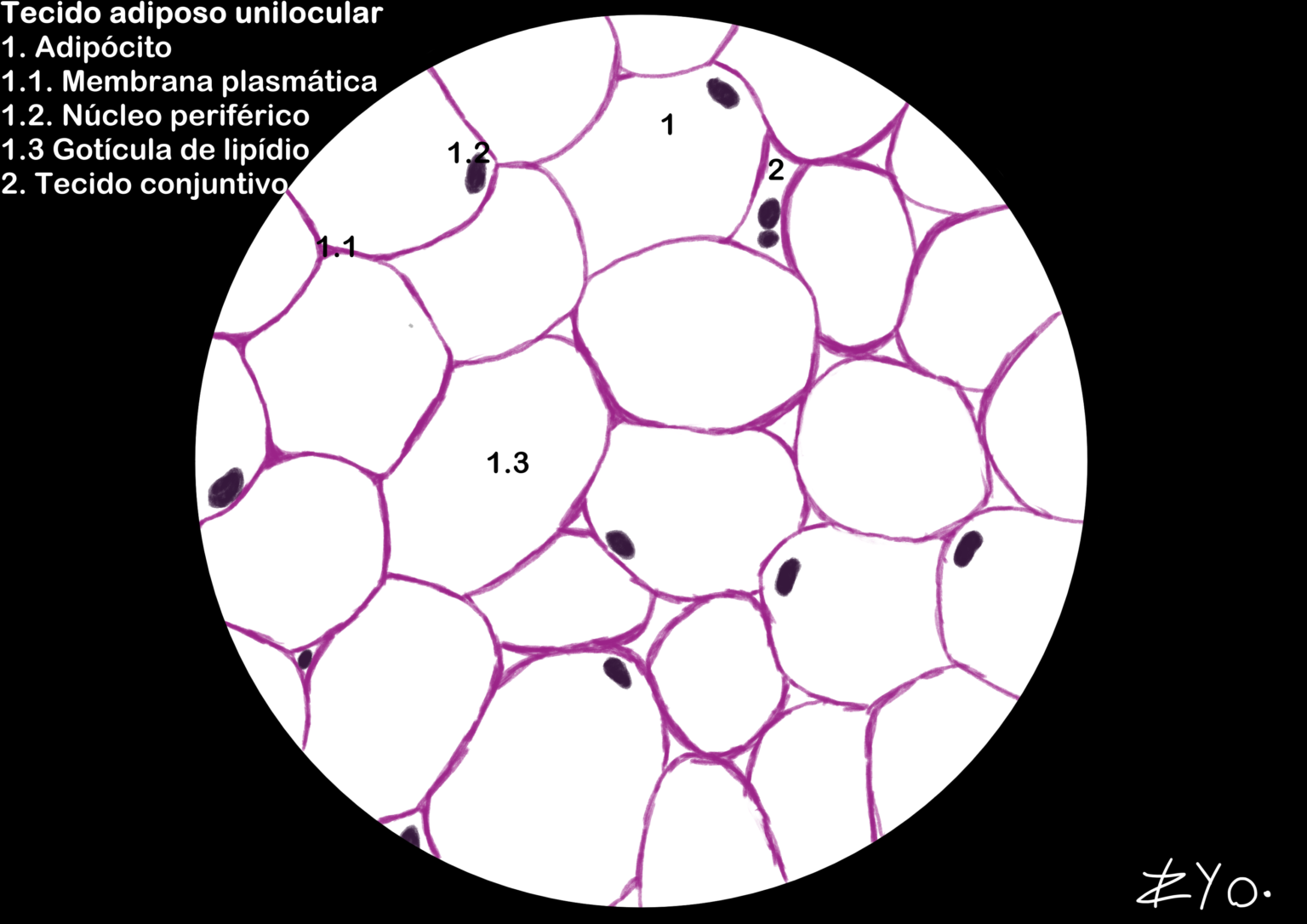
Unilocular adipose tissue is characterized by adipocytes that store a single lipid (fat) droplet, giving them a ‘honeycomb’ or ‘chicken wire’ appearance. It is found mainly under the skin (subcutaneous tissue) and around the internal organs, where it serves as an energy reserve, thermal insulation and protection against impacts.
Multilocular adipose tissue#
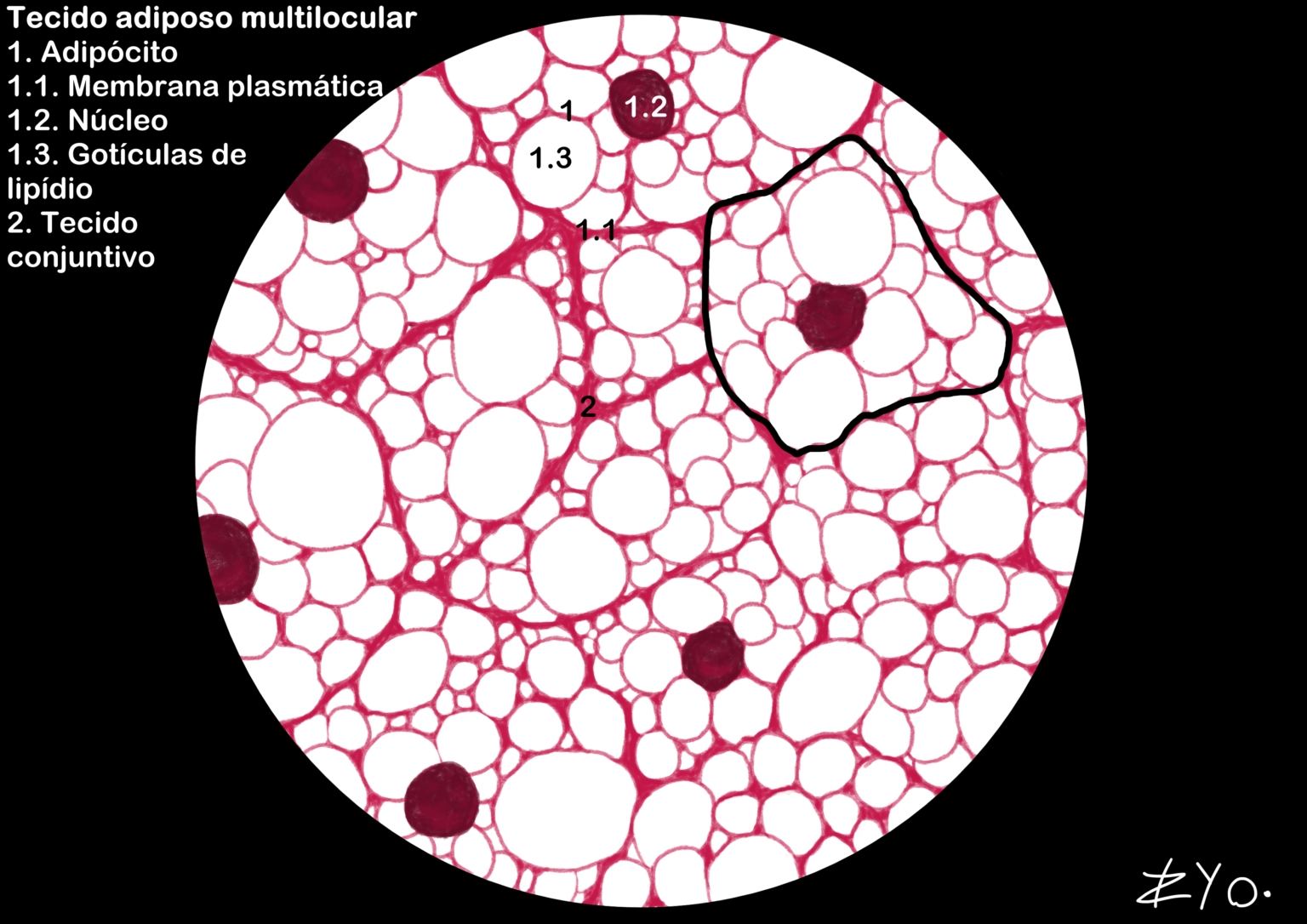
Multilocular adipose tissue is made up of adipocytes that contain multiple lipid droplets, giving them a granular appearance. It is found mainly in newborns and in hibernating animals, where it plays a crucial role in thermogenesis (heat production), helping to maintain body temperature. Multilocular adipose tissue is highly vascularized and contains a large number of mitochondria, which contributes to heat production and to its characteristic brown color.