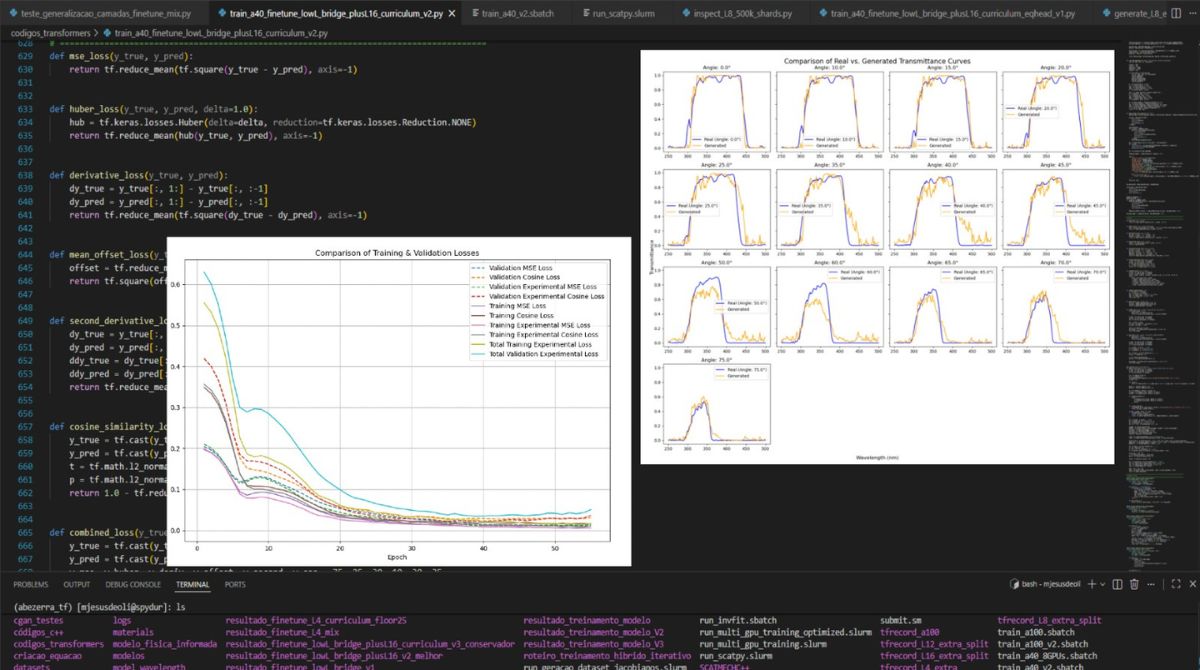
UNIFAL-MG researchers developed a machine learning model that, with little real data, was able to generate optical simulations of filters used to capture the neutrino signal. The solution proved more accurate and up to 700 times faster than the traditional simulation method.
AI model speeds up by 700 times the simulation of optical filters for neutrino detectors that help study the universe